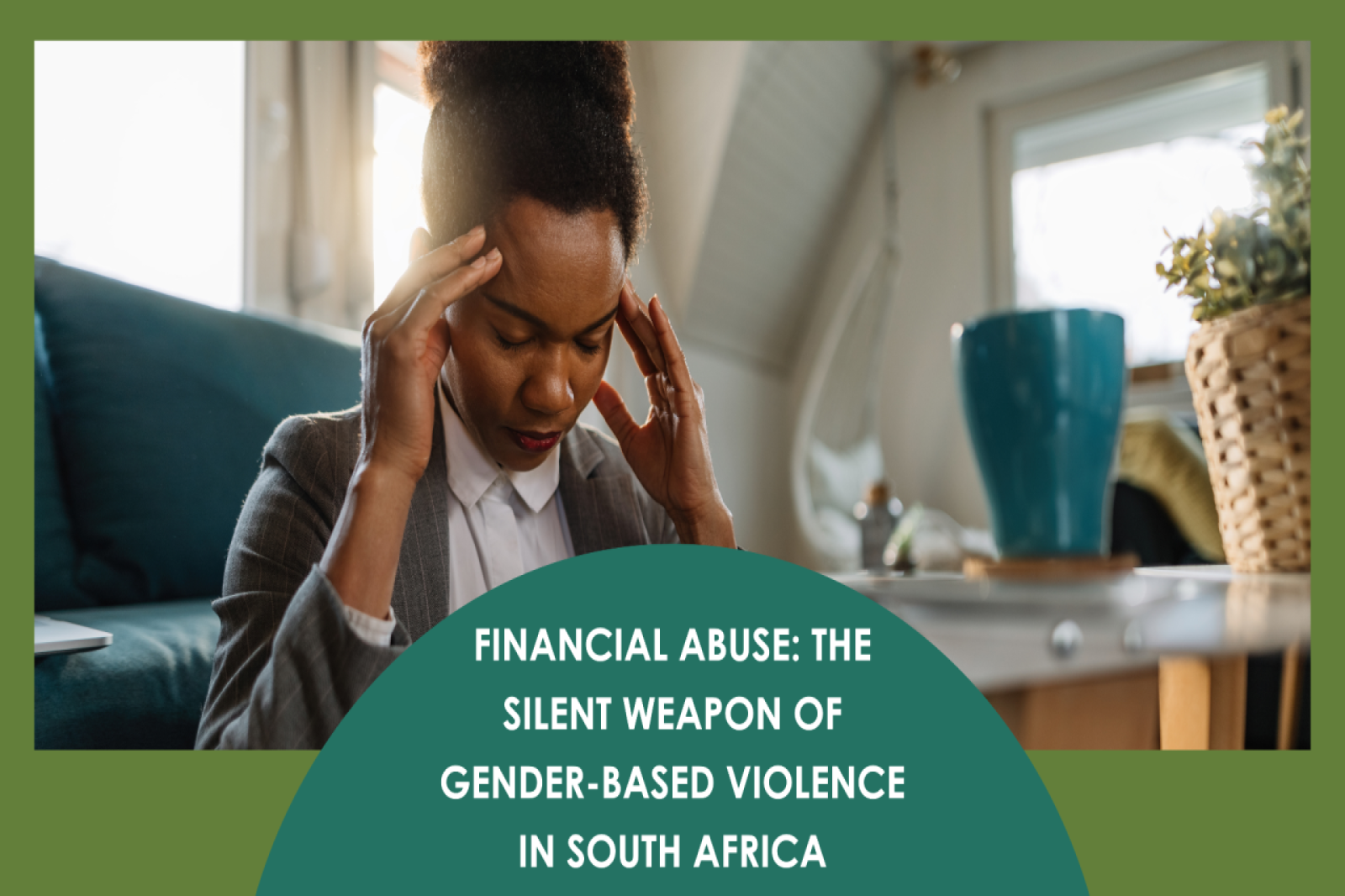
Gender-based violence (GBV) is a profound societal issue in South Africa, impacting the lives of millions of women and girls. While physical and emotional abuse often dominates the discourse, financial abuse remains a less visible yet deeply damaging dimension of GBV. This form of abuse, which limits victims' economic independence, often traps women in cycles of poverty and dependency, perpetuating their vulnerability to other forms of violence.
The Intersection of Financial Abuse and Gender-Based Violence
Financial abuse rarely exists in isolation. It is often intertwined with other forms of GBV, creating a multi-layered system of control:
- Emotional Abuse: Constant belittling and manipulation, making women feel unworthy of financial independence.
- Physical Violence: Threats or acts of violence used to enforce financial control or prevent women from challenging the abuser.
- Sexual Violence: Economic coercion can include forcing women to perform sexual acts in exchange for money or resources.
This intersection makes it even harder for survivors to escape. Without financial resources, women face immense barriers to leaving abusive relationships and rebuilding their lives.
Facets of Financial Abuse
1. Restricting Access to Financial Resources
- Preventing access to bank accounts, credit cards, or cash.
- Monitoring and controlling spending habits.
- Denying money for basic needs such as food, healthcare, or transportation.
2. Sabotaging Employment
- Interfering with a partner's ability to work by: a) Harassing them at work. b) Destroying transportation or work tools. c) Preventing them from seeking or maintaining employment.
- Discouraging or forbidding career advancement.
3. Forcing Financial Dependency
- Insisting that only the abuser manages household finances.
- Creating joint accounts and withdrawing funds without consent.
- Denying the victim knowledge of household finances or access to passwords and account details.
4. Coercive Debt Control
- Taking out loans or credit cards in the victim’s name without their knowledge.
- Forcing the victim to co-sign financial agreements or incur debts.
- Manipulating or ruining the victim’s credit score to limit their financial independence.
5. Exploiting the Victim’s Financial Assets
- Stealing money, personal belongings, or inheritance.
- Using the victim’s income without consent while restricting their spending.
- Selling or misusing assets owned by the victim.
6. Manipulating Child Support or Financial Obligations
- Refusing to pay child support or using financial obligations as leverage.
- Using economic dependence on children to control the victim.
7. Isolation Through Financial Means
- Preventing the victim from attending social, professional, or educational opportunities that might increase their independence.
- Limiting access to transportation by not providing funds or selling shared vehicles.
8. Hiding Assets During Divorce
- Not fully declaring all assets during the divorce proceedings.
Symptoms of Financial Abuse in the Context of GBV
Recognizing financial abuse as a form of GBV is crucial to addressing it. Common signs include:
- Isolation: Preventing women from working, studying, or accessing support networks.
- Control Over Finances: Abusers manage all income and expenditures, leaving women financially powerless.
- Debt Manipulation: Forcing women to take out loans or accumulating debt in their names, damaging their financial standing.
- Threats of Economic Deprivation: Using financial insecurity as leverage to keep women compliant.
Impact on Women and Their Financial Inclusion
The ripple effects of financial abuse and GBV extend far beyond individual households. For women, the consequences are deeply personal yet profoundly societal:
- Economic Exclusion: Women trapped in abusive relationships are often unable to work or access credit, limiting their economic participation.
- Loss of Independence: Financial control keeps women dependent, reinforcing the cycle of abuse.
- Generational Poverty: The children of survivors are often exposed to poverty and trauma, perpetuating cycles of dependency and inequality.
- Barriers to Financial Inclusion: Women who escape abuse frequently face poor credit scores, lack of savings, and limited access to financial services, hindering their ability to rebuild.
Financial Abuse as a Barrier to Ending GBV
The lack of financial autonomy is one of the primary reasons women stay in abusive relationships. Financial insecurity often pulls them back even when they have the courage to leave. This highlights why addressing financial abuse is critical in the fight against GBV:
- Economic Empowerment: Financially independent women are better equipped to leave abusive relationships.
- Access to Resources: Survivors need access to emergency funds, legal aid, and employment opportunities to rebuild their lives.
- Breaking the Cycle: Empowered women can support their families and communities, reducing the likelihood of intergenerational abuse.
Breaking the Chains: A Call to Action
During these 16 Days of Activism, we must commit to addressing financial abuse as part of the broader fight against GBV. This requires action on multiple fronts:
- Policy and Legislation Strengthen laws that address financial abuse as a form of domestic violence. Ensure survivors have access to economic reparations and protective measures.
- Support Systems Expand shelters and safe houses to include financial counseling and job placement programs. Provide emergency funds and micro-loans to survivors to facilitate independence.
- Education and Advocacy Raise awareness about financial abuse as a form of GBV through campaigns and community programs. Equip women with financial literacy skills to recognize and combat abuse.
- Community and Corporate Responsibility Encourage employers to provide safe reporting channels for survivors of financial abuse and GBV. Partner with financial institutions to offer survivor-friendly banking and credit recovery programs.